

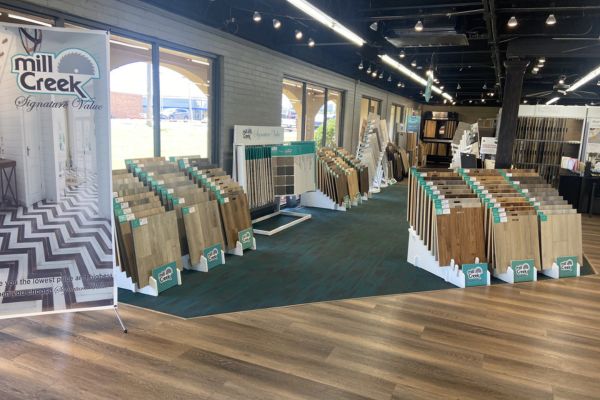
Choosing flooring from a small sample can be surprisingly misleading. The sample may look perfect under showroom lighting, beside dozens of other materials, and against a background that has nothing to do with your home. Then the flooring arrives, covers an entire room, and suddenly the color appears different, the pattern feels stronger, or the overall atmosphere is not what you expected.
This does not mean flooring samples are unreliable. It means flooring needs to be judged in context. Hardwood, laminate, vinyl, tile, carpet, and area rugs all interact with light, room proportions, wall colors, furniture, and surrounding materials. For homeowners in Rochester Hills, MI, Floorama can help you look beyond the sample itself and consider how a flooring choice will actually behave in your home. Explore vinyl flooring options while keeping in mind that the right selection should be evaluated as part of the entire room.
The Showroom Is Not Your Living Room
Flooring showrooms are designed to make products easy to compare. Bright lighting helps reveal color and detail. Samples are placed beside other products. The environment is controlled so homeowners can focus on the material.
Your home is completely different.
Natural light enters through windows at different angles. Artificial lighting changes throughout the day. Wall colors reflect onto the floor. Furniture introduces additional tones and textures. The size of the room changes how strongly a flooring pattern repeats.
That is why a floor should be judged not only for what it looks like in the showroom but for how it interacts with the environment where it will ultimately be installed.
Natural Light Is Always Moving
One of the biggest influences on flooring color is natural light. A room can look warm in the morning, bright in the afternoon, and dramatically different after sunset.
Hardwood may reveal different grain details as sunlight moves across the surface. Laminate and vinyl can appear warmer or cooler depending on surrounding colors. Tile can reflect light and nearby surfaces. Carpet can absorb more of the visual brightness, changing the overall feeling of the room.
Try to look at samples during different parts of the day. If possible, place them near the windows where the flooring will actually be installed.
Wall Color Can Change the Floor
It may sound strange to say that paint can change the appearance of flooring, but color is relational. A floor is not viewed in isolation. It is viewed against walls, ceilings, furniture, cabinetry, doors, trim, and other surfaces.
A neutral floor beside cool white walls may feel different from the same floor beside warm cream walls. A gray-toned floor may appear warmer when surrounded by wood and natural textiles.
This is why flooring should be selected alongside the major colors already committed to the room.
If you are planning to repaint as part of the renovation, consider making the flooring and wall decisions together rather than treating them as separate projects.
Hardwood Can Look Different Across a Large Room
Natural hardwood is particularly interesting because grain and color variation become much more noticeable when the material is repeated across a large area.
A small sample may look relatively uniform. Across an entire room, the natural variation can become a major part of the visual character.
This is not necessarily a problem. In fact, it is one of the reasons people love natural wood. But homeowners should understand that the finished floor will have a larger visual presence than the sample suggests.
Consider whether you want the wood to be a quiet foundation or a more expressive design element.
Laminate and Vinyl Patterns Need to Be Viewed at Scale
Manufactured flooring can also change visually when repeated across a room. Wood-look laminate and vinyl contain repeating visual elements, and the overall effect depends on how those elements are distributed.
A pattern that seems subtle on one plank can become more noticeable when dozens of planks are installed together.
Look for natural-looking variation and consider how frequently similar visual elements repeat. The goal is to avoid making the floor appear overly repetitive while still maintaining a cohesive appearance.
It can also help to view multiple samples together rather than evaluating only one individual plank.
Tile Is About More Than the Tile Itself
With tile, grout and layout become part of the final appearance. A tile sample may look completely different once surrounded by grout lines and repeated across a floor.
Large-format tile can create a quieter visual field with fewer grout lines. Smaller formats introduce more rhythm. Different layouts can emphasize different architectural qualities.
This is why the installation plan should be considered alongside the tile selection. The product and the layout work together.
Carpet Changes With Texture and Direction
Carpet has its own visual complexity. The direction of the fibers, the texture, and the way light hits the surface can all influence the final appearance.
A carpet that looks like one consistent shade in a sample may reveal subtle tonal changes once installed across a larger space. Texture can become more prominent as the material covers the room.
This can be a positive characteristic because it adds depth. But it is another reason not to judge carpet solely from a small square.
Area Rugs Need to Be Judged With Furniture
An area rug is particularly dependent on context because its purpose is usually to interact with furniture.
A rug that looks beautiful by itself may be too small beneath a sectional. A pattern that appears balanced in isolation may compete with an upholstered chair or artwork. A neutral rug may provide exactly the calm foundation needed in a room with more expressive furniture.
Think about the rug as part of a composition. Consider its relationship to the sofa, coffee table, chairs, walls, curtains, and permanent flooring beneath it.
Use the Floor as Part of the Color Palette
Rather than choosing flooring first and figuring out everything else later, consider creating a broader palette. Identify the colors already present in the room and determine whether you want the flooring to blend, contrast, or provide warmth.
Hardwood can introduce natural brown and honey tones. Vinyl and laminate can reproduce a wide range of wood-inspired colors. Tile can introduce cool or warm mineral tones. Carpet can provide broad fields of color and texture.
The flooring should contribute to the palette rather than accidentally fighting it.
Do Not Forget the Adjacent Rooms
A floor rarely stops at the edge of the photograph you are looking at. It connects to hallways, doorways, kitchens, bedrooms, and other spaces.
Look beyond the room itself. If you are replacing flooring in a living room, consider what will be visible beyond the doorway. If you are installing a new floor in a hallway, consider every room it connects.
Transitions can be just as important as the flooring itself when creating a cohesive home.
Bring the Real Room Into the Decision
The more closely you can recreate the conditions of the actual room, the more useful your flooring evaluation becomes. Look at samples with the furniture nearby. Compare them against wall colors. View them under natural and artificial light. Think about the scale of the finished floor rather than only the sample.
For homeowners in Rochester Hills, Rochester, Washington, Oakland Charter Township, and Troy, MI, Floorama can help you move from inspiration to a flooring choice that makes sense in the real world.
The perfect flooring sample is not necessarily the one that looks best under showroom lights. It is the one that still looks right when it becomes part of your actual home. When you are ready to compare flooring choices and plan your project, contact Floorama and take the next step toward choosing a floor with the whole room in mind.


