

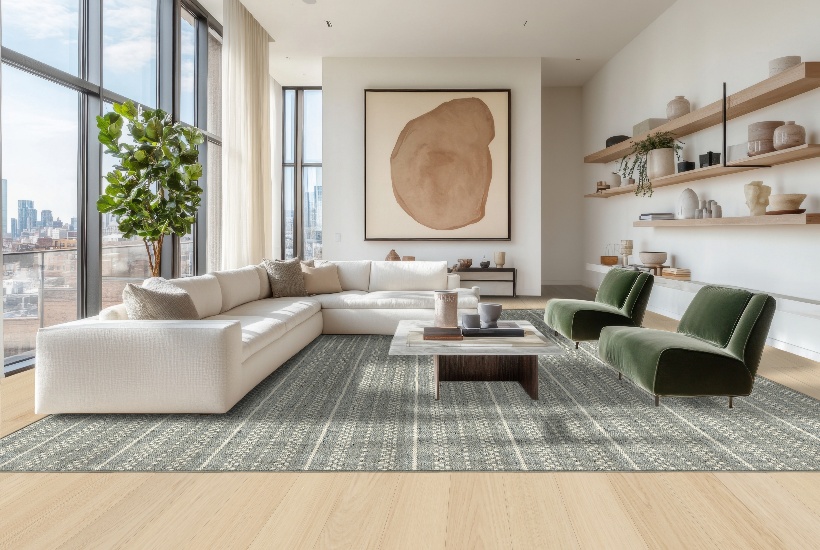
There is a common misconception that once you choose a permanent floor, the design work underneath your feet is finished. In reality, flooring and area rugs can work together to create layers of color, texture, scale, and comfort. A hardwood floor does not have to remain completely exposed. A vinyl floor can become the foundation for a bold rug. A laminate floor can gain softness and contrast through textiles. Even tile can feel dramatically different once an appropriately chosen rug is introduced.
This layered approach can be especially useful for homeowners who want their interiors to feel collected rather than overly coordinated. Floorama in Rochester Hills, MI, offers flooring options that can provide the permanent foundation, while area rugs can introduce another level of flexibility. Explore hardwood flooring as one example of a natural foundation that can be transformed repeatedly through rugs, furniture, and changing décor.
Your Permanent Floor Does Not Have to Do Everything
A common mistake in interior design is expecting one material to provide every quality the room needs. Homeowners may want warmth, pattern, softness, color, durability, visual interest, and flexibility all from the permanent flooring.
It does not have to work that way.
The permanent floor can establish the foundation, while an area rug provides softness, pattern, and a more concentrated design statement. This division of responsibilities creates more freedom.
A neutral hardwood floor can remain timeless while the rug changes with the room. A simple laminate can become more sophisticated when paired with a carefully selected textile. Vinyl can be softened visually with a rug in a living area.
Hardwood and Rugs Create Contrast
Hardwood has natural visual movement through grain and plank lines. An area rug introduces a different kind of texture and often a more concentrated field of color.
The contrast between the two can make both materials look better.
A rug can soften the appearance of a large hardwood floor without hiding the wood entirely. Leaving a visible border around the rug allows the flooring to remain part of the design rather than disappearing beneath the textile.
The shape of the rug can also influence the room. A rectangular rug can reinforce the geometry of a seating area, while a round rug can introduce contrast in a room dominated by straight lines.
Use Rugs to Define Furniture Groups
One of the most practical functions of an area rug is creating a visual boundary. In an open-concept room, furniture can otherwise appear scattered across a large floor.
Place an appropriately sized rug beneath a seating group, and the furniture immediately feels connected. The rug effectively tells the eye, “These pieces belong together.”
This can be especially useful when the permanent flooring runs continuously throughout several spaces. Instead of changing the floor to create every zone, use rugs to establish smaller areas within the larger room.
Laminate Becomes a Different Design With the Right Rug
Laminate flooring can provide a wood-inspired foundation, but the final character of the room depends on everything placed above it.
A patterned area rug can add personality to a relatively understated laminate floor. A neutral textured rug can create a quieter, more sophisticated effect. A vintage-inspired rug can introduce contrast against a contemporary wood-look floor.
This means the same laminate floor can support completely different interiors simply by changing the textiles and furniture.
That flexibility is one of the benefits of thinking about permanent flooring and décor as two connected layers rather than one decision.
Vinyl Does Not Have to Mean Visually Minimal
Vinyl flooring can provide a practical foundation while leaving room for expressive design above it. Depending on the product, homeowners can choose from wood-inspired, stone-inspired, and other visual styles.
An area rug can then provide another layer of texture and color.
For example, a neutral vinyl floor can support a richly textured rug in a living room. A wood-look vinyl can provide a natural-looking base beneath a more decorative textile. The permanent flooring handles the broad visual field while the rug creates a more concentrated focal point.
Carpet Can Be Layered Too
Area rugs are not limited to hard flooring. They can also be used strategically over carpet, although the visual and practical considerations are different.
A rug over carpet can introduce pattern, create a defined area, or add another layer of texture. The combination can be particularly effective when the wall-to-wall carpet is a relatively quiet neutral.
In this situation, the carpet becomes the broad foundation and the rug becomes the decorative layer.
As with any flooring combination, the relationship between the textures, colors, and proportions matters.
Scale Is More Important Than Most People Realize
An area rug that is too small can make an otherwise beautiful room feel disconnected. If the rug barely fits beneath a coffee table while the surrounding furniture sits completely outside it, the seating arrangement can lose its visual relationship.
A larger rug can create a more unified composition by allowing multiple furniture pieces to sit partially or fully within its boundaries.
The correct size depends on the room and furniture arrangement, but the principle is simple: the rug should be large enough to define the area you want it to define.
Texture Creates Depth Even When the Colors Are Similar
Some of the most sophisticated interiors use very restrained color palettes. Instead of relying on dramatic color differences, they create interest through texture.
This is where flooring and area rugs can work particularly well together.
A smooth hardwood floor beneath a textured rug creates contrast without introducing another major color. A wood-look laminate paired with a woven textile can produce a layered effect. A simple vinyl floor can become more visually interesting when paired with a rug that has tactile variation.
Texture allows a room to feel rich without feeling busy.
Rugs Can Follow the Seasons
Permanent flooring is, by nature, a long-term decision. Area rugs are much more flexible.
A homeowner can choose a lighter textile for a bright summer interior and introduce deeper colors and richer textures during colder months. The permanent floor remains unchanged underneath.
This flexibility allows homeowners to experiment with style without making another major flooring investment every time their preferences evolve.
Use Rugs to Introduce Personality
Permanent flooring often needs to remain versatile because it will live with the home for years. An area rug can take more creative risks.
You can introduce pattern, vintage character, geometric design, bold color, subtle texture, or an unexpected shape through the rug while keeping the underlying flooring relatively timeless.
This is particularly valuable for homeowners who enjoy changing their interiors. The rug becomes one of the easiest ways to refresh the room without replacing the foundation.
The Best Interiors Are Built in Layers
A room rarely feels complete because of one perfect product. It feels complete because materials relate to one another. Flooring establishes the foundation. Rugs define areas. Furniture creates function. Lighting establishes atmosphere. Accessories add personality.
When these layers work together, the room becomes more than a collection of individual purchases.
For homeowners in Rochester Hills, Rochester, Washington, Oakland Charter Township, and Troy, MI, Floorama can help you begin with the right permanent flooring foundation and think about how the rest of the interior will build upon it. Whether your home calls for hardwood, laminate, vinyl, tile, carpet, or a combination of flooring and area rugs, the goal is to create a space that feels intentional from the ground up.
When you are ready to explore flooring for your home and consider how it can work with the rest of your interior, contact Floorama and start creating a room where the floor is not simply beneath the design—it is part of it.


