

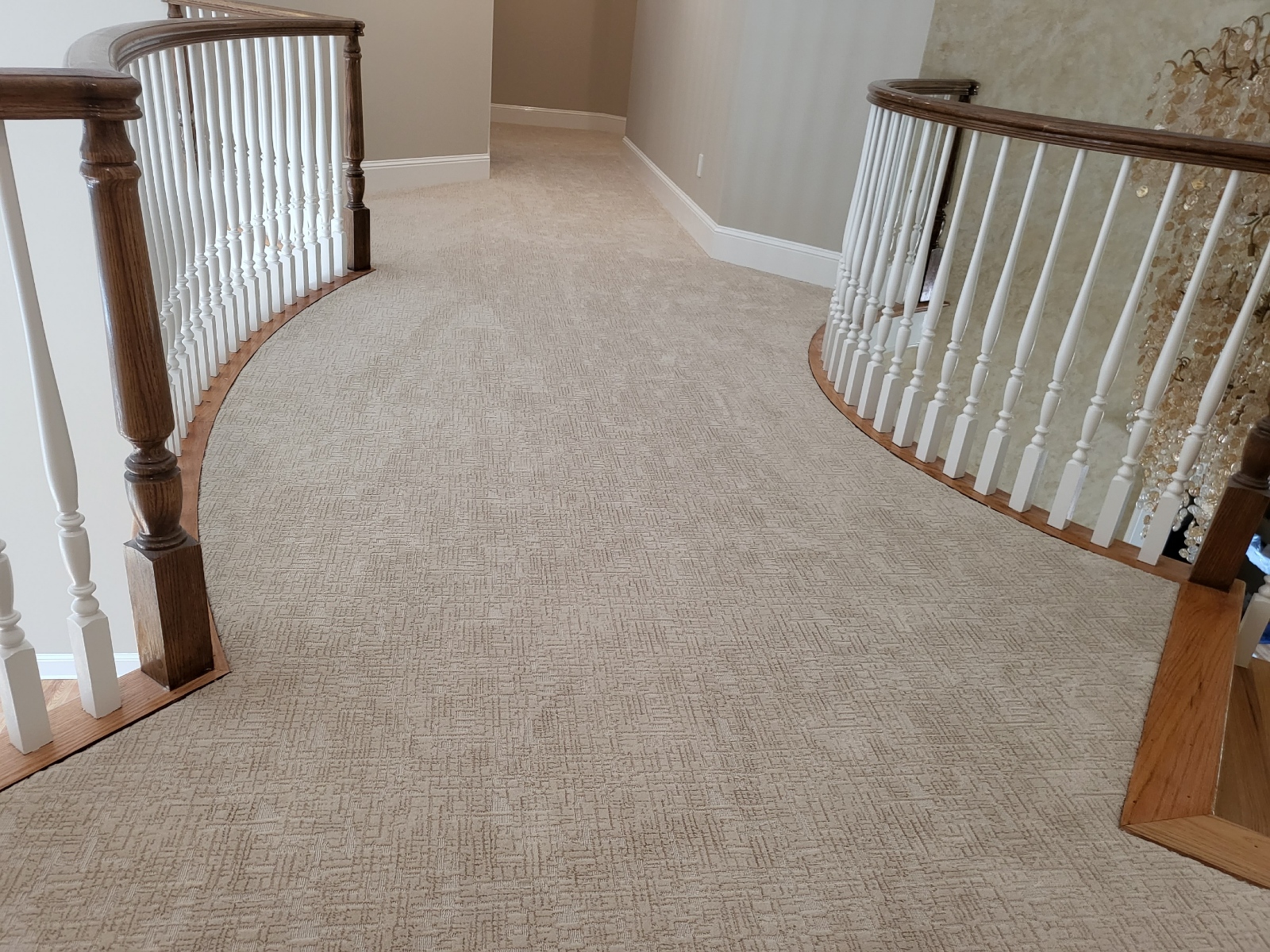
Open floor plans have changed the way homeowners think about rooms. Instead of having a separate floor, wall, and visual identity for every space, today's homes often combine living rooms, dining areas, kitchens, offices, and family spaces into one connected environment. That openness can make a home feel larger, but it also creates a design challenge: how do you define individual spaces without putting walls back into the plan?
Flooring can help answer that question. While hardwood, luxury vinyl, laminate, and tile can create strong continuous surfaces, carpet offers another possibility. Rather than thinking of carpet as something that must cover an entire room, homeowners can use it strategically to create softer, more intimate zones within larger spaces.
Carpet Can Create a Room Without Building a Wall
A large open room can sometimes lack visual definition. The dining table may sit beside the living room sofa, while a home office occupies a corner nearby. Everything is technically connected, but the spaces can begin to feel visually blurred.
Carpet introduces a change in texture that can signal a transition without interrupting the openness of the floor plan. A carpeted zone can visually establish a place for relaxing, reading, working, or gathering while the surrounding flooring continues uninterrupted.
Think Beyond Wall-to-Wall Carpet
Carpet does not always have to dominate the entire room. Area rugs can create a similar effect by layering softness and pattern over a hardwood, laminate, vinyl, or tile floor. This approach gives homeowners greater flexibility because the rug can be changed as furniture and decorating preferences evolve.
For homeowners interested in combining hard-surface flooring with softer elements, Floorama's area rug information can provide another starting point for thinking about how flooring layers work together.
Why Texture Matters in Open Interiors
Open-concept homes can sometimes feel visually hard because so many areas share the same flooring. Introducing carpet or rugs adds another tactile layer to the interior. The contrast between a smooth hard floor and a soft textile surface can make the room feel more balanced.
Texture is particularly useful when the color palette is neutral. Instead of adding another bold color, homeowners can create interest through differences in material, weave, pile, and surface character.
Use Carpet to Create a Conversation Area
One of the most effective applications is the living room. A carpeted area or large area rug can visually gather a sofa, chairs, and coffee table into one cohesive zone. This helps the furniture feel connected rather than scattered across a large open floor.
The same principle can work around a dining table, reading chair, or home office. The flooring becomes part of the spatial planning rather than simply a surface underneath the furniture.
Color Can Make the Boundary Subtle
A carpeted area does not have to contrast dramatically with the surrounding floor. In fact, a subtle tonal difference can often look more sophisticated. A neutral carpet placed over or beside a natural wood floor can create separation without making the transition feel abrupt.
For a stronger design statement, homeowners can introduce pattern or deeper color, particularly when the rest of the room is relatively restrained. The right balance depends on whether the floor is intended to disappear into the design or become part of its personality.
Carpet Can Make Large Rooms Feel More Intimate
Large rooms can be beautiful, but they can also feel less personal when every surface is hard and visually continuous. Carpet introduces softness and can make a particular area feel more welcoming.
This is especially useful in homes where the living area serves multiple purposes. A defined soft zone can become the place where people naturally gather, while the surrounding flooring supports dining, circulation, or other activities.
The Best Open Floor Plans Use More Than One Layer
A successful open interior is not necessarily one where every surface matches. It is one where the materials work together. Hardwood can provide the architectural foundation, while carpet and area rugs introduce comfort and definition. Furniture establishes function, lighting establishes atmosphere, and accessories provide personality.
For homeowners in Rochester Hills, Rochester, Washington, Oakland Charter Township, and Troy, carpet can therefore be more than a traditional wall-to-wall flooring choice. It can become a design tool for shaping how an open home is experienced.
Explore Floorama's carpet flooring options for inspiration, and when you're ready to compare carpet, rugs, and other flooring materials for your home, contact Floorama to discuss your project.


